Extreme Makeover: Room Edition

For anyone’s who ever stepped foot inside a living space of mine, you know, as well as I, that “interior design” is not quite my strong suit. Try as I might, ever since I’ve been at college I just haven’t figured it out. There is something about my room being slightly too big, my possessions being too few to fill it, and the wall finish being a little too white that makes for a brutal combination. In fact, my sophomore year at Oberlin marked the first time in my life that I had a room to call my own. It should come as no surprise then that I am uniquely bad at figuring out how to live in one.

Me and my younger sister shared a room my whole life up until I went to college and I spent my first year in an open double with a roommate who, let’s just say, I didn’t get along with all that well. That experience spurred my desire to want to live in a single and become an RA, which took me through my sophomore year and the second semester of my junior year after I returned from Japan. But I wasn’t all that keen with a room to myself either. Sure it was nice to have the privacy, but instead of a personal oasis, I found it lonely and stifling to be there for any significant period of time. As a result, I made it a habit to be out as much as possible, and my room quickly became more of a docking station than anything else, a place to sleep, shower, and occasionally sit down in between doing other things.

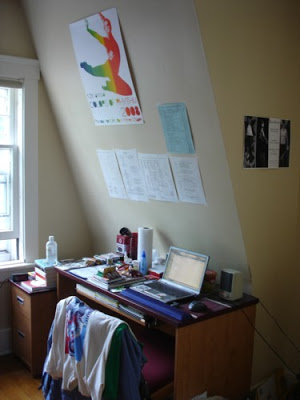
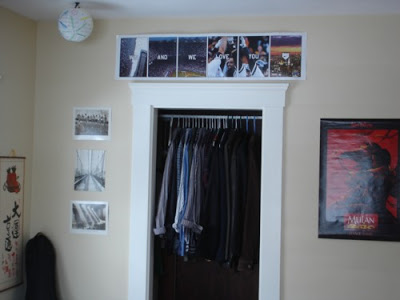
This mentality took me through my senior year, and even though I was living in a house with three close friends, those old habits were hard to break. I was rarely home, never used the kitchen or the living room to any large extent, and hardly saw my housemates. I thought that it might have something to do with the quality of my living space, and finally, halfway through my senior year, something snapped. Sure my room was neat, but it also had the aesthetic appeal of a county prison cell. I decided that I was fed up with staring out at my bare walls, marked in any distinguishing way solely by the globs of blue sticky tack that remained after a previous failed attempt at hanging posters. I went to Bead Paradise and bought a mosaic tapestry, borrowed Chloe’s hammer and pushpins, rescued my poster tube from the depths of my closet, invested in some decent affixing materials, and got to work. In a couple days’ time, and thanks in no small part to Chloe’s help and the friends who gave me the keepsakes that I used to decorate my room, I came up with this:

My wonderful old house at Oberlin, complete with bike (on "loan" for the last three years) parked out front! (photo courtesy of Hannah Tam-Claiborne).
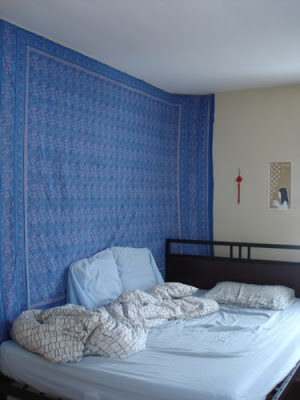
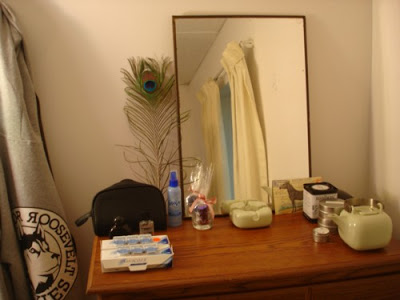
Though still short of anything spectacular, at least, as a friend so nicely put it, I had something on my walls. I don’t know to what extent the change in room décor actually influenced how long I spent at home, but I certainly appreciated going to bed under the shielding, yet gentle gaze of Mulan, staring out at me from across the room. At Cornell, I unfortunately wasn’t able to bring much of anything to give my room a personality, but luckily my dad had something up his sleeve in the way of a housewarming gift. It was amazingly thoughtful—a very practical teapot and a few different selections of tea, all wrapped in a beautiful package—to aid with long nights of studying, and adorning my dresser.


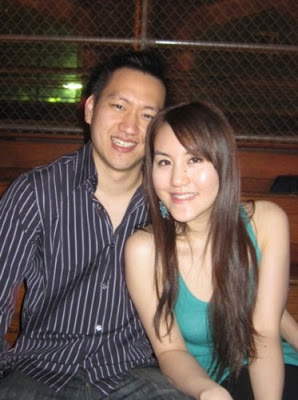
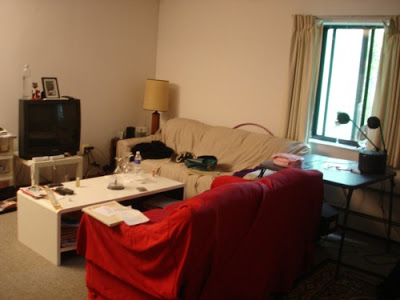
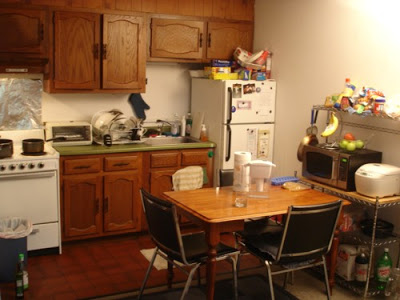
For an apartment that I found on craigslist, I have been amazingly impressed living here for the last four weeks. Though it’s not very big at all, the place is incredibly homey. The apartment consists of a kitchen, a living room, a bathroom, and two bedrooms. I sublet my bedroom from an unbelievably hospitable grad student from Thailand named Thanasin, who has one year left in his Economics PhD program. For the first three weeks, we also lived with his girlfriend Orn, who graduated in May and just recently moved back to Thailand to start her job. Whoever had the foresight to cosmically pair the two of us certainly had a sense of humor—two men in Ithaca who care deeply about women on the other side of the globe.

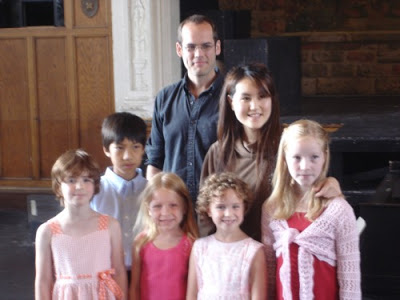
My roommate Thanasin and his girlfriend Orn. Aren't they adorable?! (photo courtesy of Thanasin Tanompongphandh).

The only real gripe I have about the apartment is how far it is from where all of my friends live. I guess I should be used to it by now, having been the only person in my high school class to commute to school from Brooklyn. Not having known the layout of Cornell before deciding where to live, I judged craigslist listings solely by their proximity to the building where I take my Chinese classes. And since it is located on Central Campus, it was about the same, distance-wise, to live either on North Campus or South Campus (also known as Collegetown). The apartment where I live now looked the best and I knew that I wanted to have a roommate so I ultimately went north, not knowing that almost all of the young people in Ithaca for the summer live in Collegetown. If nothing else, it makes for a nice long walk in the mostly clement weather this time of year to visit people from my class. And recently, my group of friends has acquired an automobile, which has made it more convenient to get back home after a long night out. Though I may miss out on some of the fun happenings in a scene dominated by restaurants, bars, and daresay even a nightclub, I at least have a peaceful room to come home to at night.

Most everything else about the location is great. I love the feeling of stepping outside in the morning when it’s still chilly out and getting a deep breath of cool, fresh air to start my day. I run into deer almost daily, most coming within ten or twenty feet of me which has been both jolting and surreal. There are tons of other wildlife too—birds, chipmunks, squirrels, and yes, even an entire family of wild turkeys that I saw crossing the road the other day. With the exception of traveling to Collegetown, the apartment is also well placed within my nexus of daily destinations—the gym and the dining hall are about fifteen minutes away, and class is not too much further than that. Finding shortcuts to get to places feels better than discovering the Northwest Passage—I have been decidedly too eager about shaving extra minutes from my commute. I’m finally getting better at estimating distances and beginning to feel safer walking alone at night.

Ironically, despite the pervading quiet of my neighborhood, the apartment complex where I live is surrounded by fraternities. In the summer, the presence is definitely not as strong, but every now and then, you can still pick out a bare-chested frat boy like a lesion from 50 yards away. If nothing else, I at least have the entire Greek alphabet practically memorized at this point. Over alumni weekend a few weeks ago, the frat right next-door hosted a barbeque for returning Cornellians. But over the course of the following week, I still saw the remnants of the cook-out—hot dog buns, mustard and ketchup containers, stacks of American cheese—strewn about the front porch (astonishingly, the beer was noticeably absent). I finally became so frustrated that I sauntered up after class one day and cleaned them out—not even wanting half the food but knowing that it was just going to go to waste otherwise. Eventually, I had to buy myself some hotdogs for dinner to make use of the giant condiment bottles still sitting in my fridge.


Though I’m still not used to spending a great deal of time at home, the time that I do spend here has been good. Weeks pass with every new issue of the Economist that shows up in the bathroom, and the apartment maintains the constant smell of rice, Thai food, and newly upholstered furniture. It is clean—cleaner even than I keep my own room, which is certainly saying something. I feel the way about this apartment that I felt about my house at Oberlin before we all stopped caring—I do my dishes after every meal, clean the stovetop after cooking, wipe down the table every time I use it to do homework, take off my shoes when I go in, and turn out all the lights when I leave.

As mentioned earlier, my roommate has been nothing short of amazing. It was a little awkward at first in terms of communicating, but now we get along great. He has been generous enough to let me use practically everything in the house—spices and sauces for cooking, detergent for laundry, the stereo, toaster, microwave, rice cooker, etc. Though he and Orn are about seven years older than me, we have spent a lot of time together without a hitch. We watch Netflix movies, make weekly car trips out to the handful of grocery stores in town (including the 24-hour Wegman’s and the Asian market!), and occasionally eat dinner together. I just started getting into a routine of playing squash with Thanasin, and Orn even made a profile for me on their Wii Fit! When it was pouring outside one day and Thanasin knew that I didn’t bring an umbrella with me, he called to volunteer to pick me up. A couple of weeks ago, they even introduced me to a couple of their friends from Thailand and I went over to eat a delicious dinner and dessert at their house that lasted well into the evening. It’s so refreshing to come home after a long day and just be able to hang out and talk with someone at the kitchen table. Just hearing stories from them and their friends has made me really want to visit Bangkok during the time I’ll be in China.

Thanasin is doing research over the summer for his PhD work and waits tables at a Thai restaurant in the Ithaca Commons on the weekends. Before she went home, Orn gave piano lessons to a handful of students at a local music center in town. In fact, Orn graduated with a Master’s in Piano Performance from the Eastman Conservatory at Cornell, one of only four people in all of Thailand to hold an advanced degree in piano. Not surprisingly, she knew Oberlin well, and had actually been there to visit friends from Thailand some years ago. Even stranger, one of her students is actually an Oberlin alum living in Ithaca—a physics major named Casey Dreier who graduated in 2005. As if it could get any weirder, when I went to see her final piano recital, I met Casey and it turns out that I took Japanese with his sister Virginia during my first year!

Orn and her students at a piano recital. Can you spot the Oberlin alum?

As much as I do like my little apartment here, I miss my old house at Oberlin constantly. More than that, I miss the people I lived with (both officially and not) and everyone else who came by on a regular basis. It makes me wish that I took advantage of living there a little more, hosting friends in my room, cooking more often, creating a profile on Rock Band. I do know, though, that it will be in good hands next year. My friend Caitlin will be living there with three girls she’s been roommates with for the past two years. There may not be as many people living with me now, but our litttle apartment is certainly still full of warmth.

中文看起来容易,做起来难 (Chinese, Not As Easy As It Looks)

Routine is a tricky thing. At once, it is something that I can’t live without, and yet, is always asking to be tampered with. At Cornell, it is proving to be as integral as ever, but I’m finding that there are considerable wholes, wholes that at Oberlin would scarcely exist. But for all intents and purposes, it’s been a good thing—I finally have time to smell the proverbial roses, get a chance to make long-overdue phone calls to friends on my way to and from places, and walk around campus without the stress of constantly running late for one thing or another. With wonderful detours to the daily grind aside, my life largely revolves around four things: studying Chinese, working out, cooking food, and seeing friends. Since trying to become proficient in Chinese is the primary reason for why I’m at Cornell in the first place, I’ll dedicate this post strictly to that.

The FALCON Program (short for Full-year Asian Language CONcentration) is surprisingly ranked among the best immersive language programs in the country for Chinese and Japanese. Though I am only participating in the summer, the Chinese program typically runs the full academic year, where students learn Introductory Chinese in the summer, continue into Intermediate in the fall at Cornell, and finish up with Advanced in the spring at Peking University in China. Because the pace is so fast, students can theoretically attain a degree of fluency in a third of the time of traditional study, which is useful for students and professionals looking to study or work in China.

Despite the questionable biases of the coverage in Cornell’s own daily newspaper, I can certainly echo its accolades. The program is structured with four classes a day, five days a week. English is greatly discouraged and is almost never spoken in the classroom. We have officially switched to using simplified characters over traditional, which, though a bit jarring at first, certainly makes learning them that much easier. Classes run in 55-minute chunks from 9-11 and again from 1:30-3:30. During the time in between, we are expected to spend two hours doing any number of related exercises—worksheet pages, translations, readings, short essays, reviewing vocabulary, and memorizing passage excerpts—for the afternoon’s class. The process is then repeated every night for the following morning. Every day, I spend that “break” in the library with a couple of other friends from class, tirelessly chipping away at our work while grabbing a quick bite to eat for lunch.

The class itself runs like a well-oiled machine. We are utilizing the same textbook as I would have been using had I taken 200-level Chinese at Oberlin, but the only catch is that we are ripping through it at four times the pace. We are doing an entire year’s worth of language study over the course of nine weeks—they didn’t call this program “intensive” for nothing. Thankfully, reading the stories in our textbook hasn’t become too much of a chore. It is refreshing to know that in Chinese, as in English, some things are just intrinsically funny. These include: getting ripped off by a Chinese shopkeeper, taking issues of Playboy magazine through customs, the number of times one suffers from diarrhea after eating watermelon, whether or not a person can contract an infectious disease from a squat toilet, and the reasons why someone might walk their caged bird through a Beijing park.

Instead of one or two professors, we have five, all with distinctly different quirks and teaching methods. Of the five, only one is a man—noticeably more laid back, but also more apt to mumble his words. Aside from class, we have weekly “Tea Time” every Friday afternoon, which is a great way to talk informally with professors and students in a (mostly) relaxed environment. I feel that it is the best way for us to practice—not having to worry too much about structure or grammar, and simply trying to communicate. It was there that I learned that the Chinese FALCON Director is actually an Oberlin grad, who was pleased to know that I was participating in the program!

There are currently eleven students enrolled in the class, out of a group that started with thirteen. Of them, all are Cornell undergrads save for me, and most are first- and second-year students. Ironically, the two that shared the most in common with me were the two that dropped—one, a fifth-year at Cornell who needed a few more credits to graduate, and the other, an undergrad at Vassar, who was moved down to the 100-level class for failing to perform. In fact, it originally appeared as if the class was designed to weed outsiders out. In the first week, I had to put up with a ton of unfamiliar vocabulary, partly as a result of Oberlin’s using a different 100-level textbook, and partly because of the specificities to Cornell’s campus. I quickly got used to the words for “slope,” “gorge,” “Ithaca,” and “snow.” There was also a lot about the format of the class and the teaching style of the professors that I had to acquaint myself with (notably, Cornell doesn’t use the Honor Code). But the whole initiation, much like a fraternity’s ritual hazing (I’ll get to fraternities in another post), made me that much more driven to succeed.

And so far it’s paid off. I’ve done quite well on all the homework and tests that we’ve had, despite that fact that I’m not taking this class for the grade (my transcript is over and done with until grad school) or the reputation (I presumably won’t be in class with any of these people again). Like most things, I like to think that I’m doing it for myself, and in this case, the hope that adherence to the rigid structure of the program will allow me to be better prepared for the next two years in China. As I mentioned briefly in my first post, I’m very fortunate that I’m still very much in an academic mindset. Had I been at home for a solid three or four weeks prior to arriving, my motivation for learning would no doubt be staggeringly low. As it is, I often have to find the energy and the impetus for studying or doing homework every night, as opposed to say, writing another blog post. The workload is about as difficult as one might expect from a program of this caliber, but thankfully, not overwhelmingly so.

Even though the subject matter at Cornell is of a slightly different nature, my study habits are almost completely unchanged from my undergrad years at Oberlin. I always opt to do my homework early in the morning over staying up late, and as previously mentioned, I now spend every afternoon, as I did every evening at Oberlin, in the library. My housemates can certainly vouch for me that I spent more time there than I did at my own house senior year. Much to my complete surprise, Cornell has more than 20 libraries, most focused around the niche subjects that it offers as majors: engineering, law, hotel, fine arts, math, and ornithology, to name some. Although I haven’t found a place quite as academically stimulating (and aesthetically stultifying) as the infamous Classroom, I now oscillate my time between a little café much like Azariah’s and a computer corner much like, well…let’s just say that I really am a creature of habit.

A view of Olin Library, just about as physically unappealing as Mudd, which I frequent nearly every day.

Though I’ve been very happy with FALCON thus far, taking it has made me wish that I started studying Chinese earlier. When I was a first-year at Oberlin, I knew that I wanted to study language, and with Spanish all but ruined for me by my AP Spanish teacher in high school, I decided that I would either stick with Japanese (which I had been taking for three years up to that point) or make the switch to Mandarin. The placement test was to be the true deciding factor for me; if I placed into second-year Japanese, I would take it, and if not, I would start out fresh with Mandarin. The rest, as they say, is history.

It’s funny, though, how such a seemingly insignificant decision shaped the whole course of my studies. Had I not taken Japanese at Oberlin, I would never have spent a semester in Japan, nor have become at least moderately proficient in the language. As a result of studying abroad, I knew that I wanted to continue to explore Asia but did not want to spend two more years in Japan, resulting in my decision to start taking Mandarin during my senior year. Had I gone the China route, I may never have wanted to pursue Shansi at all. Even if I had, I would almost certainly have had to spend this summer doing a language program in China rather than the states because my level would have been too advanced for the strictly beginner and intermediate level Chinese summer courses offered at Cornell (and most other American universities). Needless to say, had I not been doing Shansi, there would be no chance that I would find myself at Cornell for the summer either. First, continuing to study Chinese would seem negligible, and second, I wouldn’t be able to afford the cost of tuition, room, board, and transportation that Shansi has generously subsidized (one of the many perks of the fellowship).

I’m really glad that I decided to start learning Mandarin. Though a lot of my impetus came from the hopes of doing Shansi after graduation, much of it was aimed at trying to bridge the generational gap between me and the Chinese side of my family. I have always felt slightly ostracized among my Chinese relatives because my sister and I are the only two people in the family who can’t speak Cantonese. It has been a point of contention for us our whole lives, and I feel that in a lot of ways it has stilted our relationships with cousins, aunts, and uncles on that side. Though they were very happy to hear about my upcoming trip to China, in some ways they knew, like me, that I would still never really be able to talk to them.

Cornell, in addition to tons of other Asian languages including Vietnamese, Korean, and Sanskrit, also offers Cantonese, something that I was sorely remiss for at Oberlin. Other half-Chinese friends of mine have griped about not wanting to study Mandarin for its lack of utility among family, and I certainly share their sentiments. Hopefully one day I will be able to pursue Cantonese (maybe when I go on a trip to visit Guangdong), but if nothing else, both languages are still written using the same characters, allowing me the ability to communicate with family, armed with a pen and paper in my hands.

Calligraphy, Middle School Flashbacks, and the Miracles of Rice

Thinking about where I was last Friday made it difficult to imagine how these past two days in Ithaca could possibly hold a candle to my time at home in the city. I spent last weekend in New York after a long ten-day hiatus, splitting my time between Julie’s barbeque at her house in Queens, my cousin’s post-wedding reception with family in Brooklyn, and as much time as I could with Chloe, on this, the last weekend I would get to see her before her two-month trip to Korea. But inherent in my pessimism was also the hope of avenging the previous weekend at Cornell, a long two days where I relegated myself notably to sitting alone in my room and feeling sorry for myself. Since then, I had bridged a couple more friendships and was hopeful that this weekend could make use of the new phone numbers I had had the foresight to acquire. In the back of my mind, I knew, at least, that these two days couldn’t be any worse.

And right I was! Far from a spectacular weekend, this weekend was also not abysmal, a favorable tradeoff to be sure. Following the tenets of TGIF, Friday was met with another short day of class, but this week we had the choice of going to an optional calligraphy lesson that our professors promised would be fun. An over-achieving bunch, the entire class made an appearance, and we spent an hour-and-a-half after lunch listening to the talented, if not slightly crotchety, local artist and calligrapher of over 40 years, Jim Hardesty, lecture us on the merits of his craft, taking most of that time to actually wow us with some demonstrations. With the stipulation that we would all practice and come back to the next class, we all got to keep a brush and some practice paper along with what he called “The Bible” for learning how to paint characters using the correct strokes. We also got to chime in every time he was finished with a piece to reap the spoils of his labor. Trying to hold out until his most “advanced” work, I was fortunate to get the last of the paintings that he demoed for the day.


A Jim Hardesty original—now proudly adorning the blank walls of my room! The Chinese proverb on the right has something to do with the moon’s reflection on the water.

It made me think a lot about my own experience with calligraphy. For those who didn’t follow my email blog missives from Japan, I took a
sumi-e Japanese calligraphy class at Kansai Gaidai University during my semester abroad. I originally thought that it would simply be a class devoted to the practice of making our characters look artistic, thus better enabling me to memorize the scores of kanji for class. But quite to my surprise, we focused very little on the actual writing, and instead spent the semester learning the various elements comprised in landscape painting—trees, leaves, branches, rocks, cliffs, different types of flowers, etc. It was the first art class I had taken since perhaps middle school, and it completely made me rethink my relationship to it. I don’t know what this class at Cornell has in store—sadly, we only have four sessions scheduled over the course of the summer—but if it’s anything like the brush painting in Japan, I’m in for a treat.


My final project from my sumi-e class in Japan, on display at a showcase of student art at the end of the semester.

Calligraphy was followed up by the weekly tradition of “Tea Time,” a nice outing despite my being the only member of the 200-level class to attend. If nothing else, I at least made up for my peers’ absence in the staggering number of cookies and cups of tea that I consumed before heading home. The afternoon was followed by a nice evening out—my first real jaunt into Collegetown to eat with a group of friends. We dined at what might rightly be called the Olive Garden equivalent of Mediterranean fare, and grabbed some bubble tea at a local café afterwards for dessert. Despite the tea being exceptionally sweet (unfortunately not up to Chinatown standards), conversation flowed effortlessly until it eventually became too chilly to brave the outside deck any longer. Afterwards, we left to go play video games at a friend’s apartment, and with the lack of Rock Band notwithstanding, it was enough to make my old housemates at Oberlin proud.

I woke up late on Saturday, my body’s way of needing to repent for a week’s worth of under-seven hour nights of sleep. It felt a lot like coming home from Oberlin on school breaks—requiring at least 10 hours to feel remotely charged, and even then needing an extra effort to actually get out of bed. I think it’s a product of knowing what there is to wake up for. For the most part, I haven’t been able to replicate what became a routine six hours of sleep per night rotation at Oberlin. Even when I was working during the summer, a certain part of me was cognizant of the value of going to sleep early to prepare for a full day’s work. On the weekends at Cornell, it’s especially hard because there isn’t anything at all pressing that needs to be accomplished between the hours of 8 and 11am. If anything, that time falls by the wayside anyway, lost in some bizarre combination of daydreaming and Facebook stalking. I have always held fast to the belief that, if all else fails, food is one of the only true incentives for waking up, which is why on the rare occasions that I do nap, it is always before dinner.

And so it came to pass that shortly after waking up, I headed to the dining hall for lunch. Saturday was the first day that the Cornell dining halls were open for the summer and I was curious to check them out. Having not given my dining situation too much thought before, I originally signed up for the meal plan concurrently with my enrollment in the FALCON Program because I figured that it would be an easy way to keep track of my meals, save me from spending a lot of time in the kitchen, and make it easy to bill Shansi for the costs. However, after two weeks of cooking and grocery shopping, I have come to really relish my newfangled mealtime ritual. But thankfully, at least for the sake of Cornell’s meal plan, I am in dire need of a trip to the supermarket, so it was fortunate that I had a meal waiting for me. When I arrived in the vicinity of the dining hall, I was immediately met by a swarm of parents and young students. Unbeknownst to me, Saturday was also the start of Summer College, what I have come to gather is a program designed for select high school students to take college classes prior to their enrollment as undergrads. What I also didn’t expect was how intimidated I was in a place dominated by people four years my junior.

It wasn’t the first time that this sort of thing has happened. Take middle school for instance. It scarcely mattered how old I was—eleven, twelve, thirteen—but every day on my way home from school I’d have to pass through Carroll Park, notorious for the ruffians who would linger out by the basketball nets and the baseball diamond past dinnertime. Often there was no trouble at all—a stiff-faced, nose-to-the-grindstone Daniel would walk briskly from one end of the park to the other, trying to prevent eye contact at all costs. But occasionally there was, and more often than not it came at the hands of 4th- or 5th-graders just looking for something to do after school. For some reason those memories still stick with me, the fear that I was so powerless to hold my own against kids seemingly half my age. To this day, there are still certain articles of clothing that I refuse to wear—sweatpants, jerseys, bandanas, baseball caps—all from simply reaping up that past. I guess to a certain extent your inner child will always be with you, a reminder of the insecurities and fears that you harbor, no matter how badly you try to forget.

Needless to say, though, the situation at the lunch table didn’t result in my need to prove myself to a group of high school juniors and seniors. I realized instead, though, how hard it must be to hack it as a kid these days. Everyone around me looked so incredibly grown-up and hardly fazed about their upcoming summer away from home. Was I the only one feeling the least bit lonely and insecure? Looking around the room, many once-strangers were already starting to mingle, discussing class schedules and meeting places, and lamenting about the fog and rain that still hung in the air like an omen. Meanwhile,
my primary concern was snaking around the oblong dining sphere, trying to investigate all of the many food options and guard them greedily on my plate like a rabid animal. Maybe I’m just shy. Or just especially shy when I’m hungry. In any case, the food actually proved to greatly exceed my expectations. Out of the comfort of familiarity, I headed straight for the "Asian" counter first, helping myself to a plate-full of steaming white rice. It hardly mattered that I have a twenty-pound bag of the stuff at home that I dig into almost every day (this tidbit will prove useful later). I must say that their generous spread made me a bit jealous of the somewhat hackneyed selection offered at Oberlin’s dining halls, but thanks to eating in a co-op, I didn’t have to travel there too often as it was.

Fortunately for me, the dining hall at Cornell was located squarely across from the gym. Thinking ahead, I packed all of my necessary work-out accoutrements before I left my house, but as I was about to go into the gym, I chanced upon a familiar face. A guy from my Chinese class was followed by an eager pack of friends, brandishing a Frisbee, and generously offered if I wanted to join them. What the reader needs to know about this situation is that it was still raining out—as it had been almost continuously for the last 48 hours up until that point. The ground had also just been aerated, and with the onslaught of rain, was now peppered with soggy, pulverized clumps of soil. In the unending quest for friendships, I hastily agreed despite my better judgment—namely, because I am terrible at throwing a Frisbee and I am not often inclined to running around in the mud.


This weekend also marked the first official day of summer, a welcome respite from two days of bitter rain.

The game turned out alright for the most part. We played “Asians” versus “Whites” and despite my silent “But what if I’m half?” plea, I got clumped in, for perhaps the first time in my life, with Team White. Cornell has such a robust population of Asian Americans that I would surely have felt slightly inadequate as a mixed-race person had I gone to school here. In many ways, I am fortunate that Oberlin has a relatively small but close-knit community that helped to foster my identity formation and enabled me to get so involved with Asian American causes on campus. No one’s really said anything to me about race here yet, but it just feels like the general attitude is somehow different.

Long story abridged, I quickly learned to play Ultimate, after strangely avoiding it for my four years at Oberlin, all while getting pelted with falling rain and upturned earth. Despite my griping, it
was strangely refreshing to get that dirty, even if it now means putting up with the horrible stench those clothes emit until my next laundry cycle. But much to my distress, when I finally left the field, I realized that my sweatshirt had been eviscerated from under the safety of an umbrella and was steeping in a puddle of water. Amongst the waterlogged contents was my cell phone, which would not turn on at the time I fished it out of my pockets. Slightly panicked, I remembered perhaps the most valuable nugget of information I had gleamed from my summer internship at Popular Mechanics last year: how to save a wet cell phone. I immediately went home and got a nice bowl of dry rice for my phone to wade in. The next day, when I popped in the battery and turned it on, miraculously the phone worked like a charm. I’m convinced that doctors should start trying to devise a curse for cancer out of this stuff.

Have Diploma, Will Travel (Back to College?)

It seems like ages ago and just yesterday that I left the place I have called home for the last four years, after being swept up in a rented minivan with my family and all of my belongings for a 10-hour journey back to that other home of mine, in New York. It was then that I recounted a story that a friend told me when she graduated two years ago, that moving away from Oberlin was like having one of her limbs ripped from its socket. Four years ago when I decided to enroll, I knew that Oberlin would be the place I called my college, but I didn't think it would become part of who I am--my identity, that which lies beneath the skin. Now that I've graduated, it is not a stretch to say that even some part of my physiology will remain tied to a little town in Ohio long after I've left.

As you might expect, the Commencement Ceremony was fraught with the kind of emotional outpouring necessitated by the occasion, goodbyes to faculty and professors on the march in, hugs from friends and family on the way out. I left Oberlin without so much fanfare as the joyous sadness of the last four years behind me, of knowing that a chapter of my life has ended, and whatever great experiences the next will bring still requires the proper mourning of the present. My dad likes to remind me of a particular moment, diploma fresh in hand, when I accidently strayed from the path of graduates on our way back to the seats. I mistakenly found myself walking down a row of faces on the outskirts of the perimeter, only some familiar, but all offering beaming smiles and congratulatory words. Eventually, I entered a clearing where a small group of friends had gathered. As President Krislov's final remarks came to a close, I suddenly, and hardly able to hold back, broke down in tears. It was then that it truly hit me that some of the people I care most about, would, after that day, take some time for me to be reunited.

But even at my most nostalgic, it was (and is) cathartic to know that no goodbye is truly goodbye, that I will no doubt find myself in Oberlin again, and that the people I have met and have had an impact on me will surely remerge in my life. I spent the better part of last week thinking about Oberlin in what proved to be an introspective way to occupy my newfound free time. Since then I have been sated with the fact that many people graduate and come to settle in big cities like New York, where thankfully it hasn't been too difficult to keep up contact. For those more distant, there are trips to be had, which have considerable value in their own right--bottling up a friendship until the moment when, after traversing state or national lines, you can finally see a person once again.

A few of my closest friends on Commencement Day (photo courtesy of Hannah Tam-Claiborne).
I feel fortunate that unlike many graduates, I have a decent idea of how life for the next two years will look, even if my time abroad necessarily means more time away from those people here at home. I will be going to China in late August to start my two year stint as an English teacher at a rural university, but not before I finish an intensive summer Chinese language program at Cornell University in Ithaca, NY. I was originally slated to leave for China in mid-June and do a language program there before I start teaching, only to switch at the last minute to be a little closer to home for the next two months. I'll inevitably still miss the little things, but I'll be able to be there for what counts (weddings, birthdays, the Nathan's Hot Dog Eating Contest).

The way I see it, the summer is the time that friends remember, and by the time late August rolls around, everyone will be so scattered that it hardly matters whether I am living in middle-of-nowhere Ohio or middle-of-nowhere China. Needless to say, this is also one of those rare times in life when there is a definitive break, where "what's next" is less a given than a process of discovery, and that it will only be a matter of time before friends start to get busy with obligations more indicative of their parents. My hope is that I'll be able to maximize that break, all with the thought that by the time I return from China, we will all be further along the way to beginning the rest of our lives.

Ironically, the start of the "rest of life" for me probably feels different from most of my graduating class, namely because I find myself back at college, and not even the one from which I graduated. Since being at Cornell a little over a week now, and still very much in the college mindset, it is hard not to make comparisons with Oberlin. Even just walking to class in the mornings I feel like I am observing everything with marked scrutiny, whether it's the conversations I have, the food I eat, or the buildings I enter. Of course, in part I am trying to validate my alma mater, but do so in a way that is still appreciative of my new environment. Ivy or not, my own four years' worth of learning and experience mean incalculably much to me. My only intimidation when I arrived was how much that would resonate with the student body here.

Far from a competition, my experiences thus far have been tinged with a certain curiosity--a pervading, "What would life have been like had I gone to Cornell instead?" Of course, I'll never know the answer to that question, but I will do my best in the next two months to see what, if any, conclusions I can surmise. One of the only other colleges that I've spent a significant amount of time (and written anything about) is Tufts University, and even that was a completely different experience. It turns out that for a pair of liberal college campuses, both boasting large feeder populations from elite(ist) NYC high schools, Cornell and Oberlin couldn't be more different.

The first thing that I noticed when I arrived was its size. It was a seasonably cool June morning and I had been walking with my dad for nearly twenty minutes running mundane errands on campus, registering for my summer class, buying the necessary textbooks, and trying to locate a place to eat lunch. The map we were handed at an info booth near the parking lot had been highlighted and marker-streaked and started to resemble something more out of Treasure Island than it did a college campus. Part of the reason for its size, of course, is because Cornell has almost seven times the student population of Oberlin, not to mention the requisite faculty and staff to manage it. With that size comes a great deal more resources, but a loss of intimacy, or at least that which can exist between all of those parties. For those who like big schools, it's great, but I've always preferred the closeness of Oberlin, taking solace in the fact that I could walk nearly anywhere on campus and instantly recognize someone I knew. Here, it would seem miraculous if I saw the same face twice outside of the thirteen students in my Chinese class, not to mention what the campus must look like during the school year.

A bigger campus also translates to more walking, and I have certainly had no shortage of that. Gone are the days when I could wake up a mere ten minutes before class, throw on some clothes, and bike to my first class. Now from my apartment to class is a solid thirty minute walk across uncertain terrain, netting over a mile each way. The good news is that there is a bus on campus that makes travel easy, especially, I imagine, in the winter (which, believe it or not, is considerably worse than Oberlin's). The only caveat is that one has to pay a fare: a buck-fifty per ride. Cornell does offer an unlimited bus pass to its students--what would have cost me $65 for the summer--but I quickly passed up that offer for a $65 summer gym membership instead (yes, you have to pay membership fees to use the fitness centers at Cornell), effectively doubling my exercise quotient. Between class, the library, the gym, and going into town for food and groceries, I would estimate that I walk upwards of four miles a day.

If the consequence of a proclivity for cheapness is doing a lot of walking, it helps at least that Cornell provides a smorgasbord for the eyes. The campus is truly beautiful, and amazingly runs the gamut from complete forest to quaint city, and everything in between. Far from being flat, it's full of trails, hills, valleys, and of course, gorges. Every day I try to take the bad with the good--my apartment sits at the top of a ¼-mile hill that I have to trudge up every afternoon, but I get to walk across a breathtaking suspension bridge on my way to class. Like Oberlin, the town is touted as being very alternative, although even here I would have to say that it feels slightly more mainstream. After all there is a Starbucks and not all of the surrounding restaurants offer vegan options on their menus.

The view from the suspension bridge. When it's warm outside, people congregate to lounge and swim by the rocks way down below.

Also like Oberlin, there seems to exist a certain town-gown divide. Cornell, together with Ithaca College, make up roughly half of the population of Ithaca, and Cornell owns almost all of the land north of Cascadilla Creek, what would surely be a point of contention for native Ithacans if not for the fact that most of them are employed by the college in some capacity. I have heard from Oberlin friends who live in Ithaca that many people in the town don't venture out to Cornell's campus much, and I can hardly fault them. I would like to investigate the kinds of initiatives (if any) Cornell has to try to bridge that divide, in the way that Oberlin has with the Bonner Center for Service and Learning and the Office of Environmental Sustainability, to name a few.

What I probably miss most about Oberlin though is the extensive network of co-ops. It took me four days before I eventually broke down and bought the cheapest one-subject notebook I could find at the Cornell store, at a price that, had I still been at Oberlin, would have left me enough money for at least eight notebooks at the Recycled Products Co-op and potentially infinitely more at the Free Store (located in the basement of Asia House). With the lack of dining co-ops, I have been reluctant to buy groceries at abusive individual-serving-size retail prices, not to mention do all of the cooking and cleaning myself. There is something to be said about making a meal that other people can enjoy and take part in, but in the meantime, I will have to be content with the decent, but over-priced fare at college cafés and the humble dinners I cook for myself in my apartment.

The campus was a melange of colors and textures during Alumni Weekend.

All-in-all, this summer at Cornell is shaping up to be a very nice middle ground between the somewhat polar extremes of being at home in New York and a teacher in China. I am far enough away to miss friends and have to fend for myself, but not so impossibly far that I'm unable to visit home a few weekends during the summer. I am cooking a lot of meals on my own, yet also have the opportunity to go into town to eat. I'm studying and speaking Chinese seven hours a day, but I still get to use my native tongue when I talk to friends outside of class. I am meeting a lot of new people, though many still share a considerable degree in common with me. Living in Cornell and surrounding Ithaca for the first time has given me the opportunity to explore, but since Cornell is a college, it still affords me certain familiar amenities (gym, classrooms, libraries, etc.). I am both coping with large degrees of introspectiveness and an overwhelming amount of things to do. The mechanics are the same, but everything about the process feels different.

This past weekend was Alumni Weekend at Cornell, which unlike at Oberlin, is held two weeks after Commencement. Walking around made me miss Oberlin all the more, seeing excited parents and their children, twenty-something couples, and more than a handful of grandparents, all sporting oversized nametags and shopping bags full of college swag. Age notwithstanding, I couldn't help but notice that they looked a lot like me, wide-eyed and slightly overwhelmed, exploring what must have felt familiar and yet strangely new all at once. It helped to strengthen my case for when I eventually sidled over to one of the many buffet tables, casually including myself among the ranks of recent alums, albeit of another place.

Where I hope to be in fifty years.